
Loading...
Serving Roseburg, OR and surrounding areas. (458) 803-7783
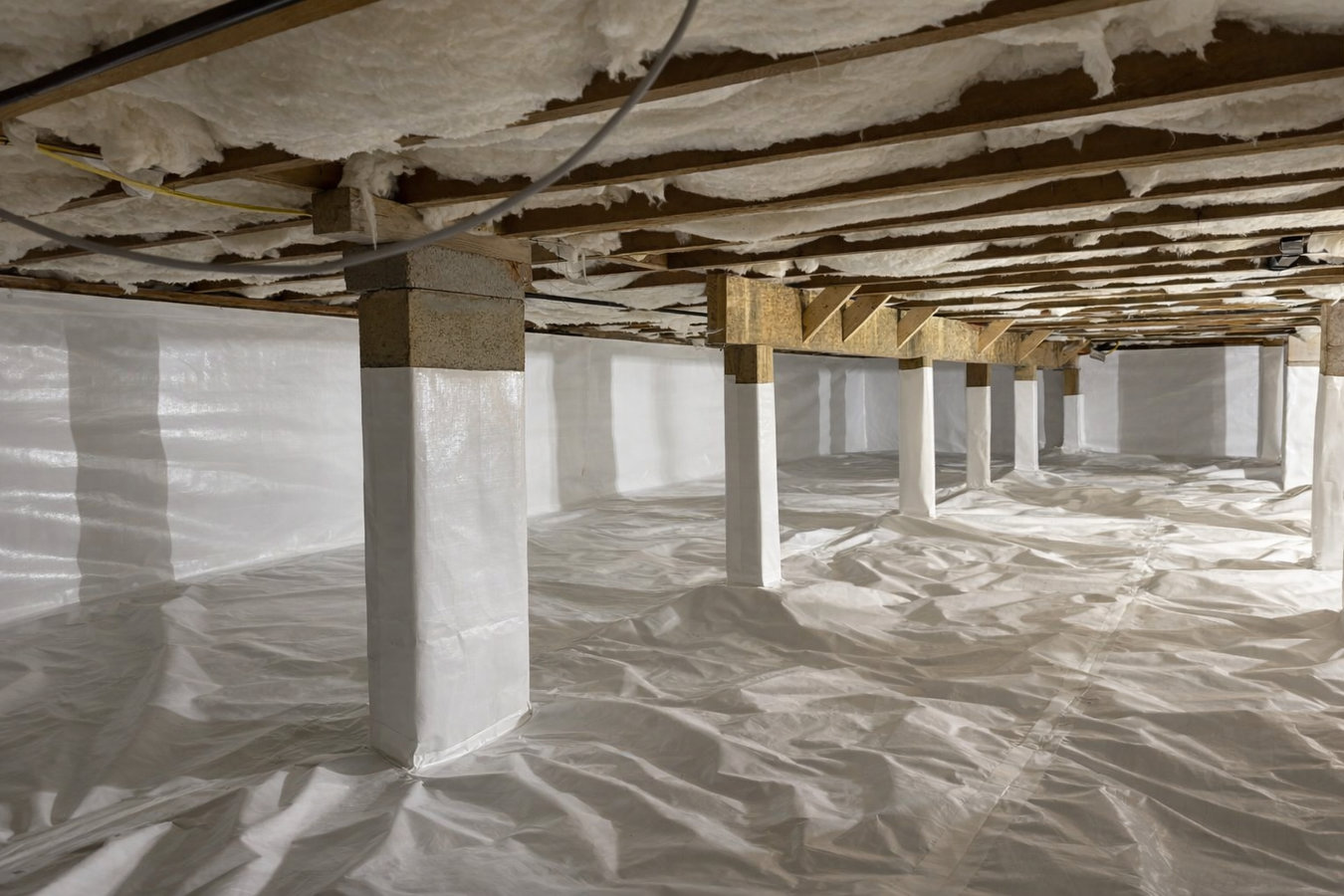
Ground moisture under your home causes musty smells, cold floors, and rot you cannot see. A proper vapor barrier stops it at the source.
A crawl space vapor barrier in Roseburg is a thick plastic sheet laid across the bare dirt floor of your crawl space, blocking ground moisture from rising into your floors and framing - most installations are completed in a single day with no major disruption to your home.
Roseburg sits in the Umpqua Valley, where rainfall runs from October through April and clay-heavy soils hold water near the surface long after the rain stops. Without a barrier - or with a thin, torn one that was installed decades ago - that ground moisture moves upward into your crawl space, softening wood framing, feeding mold, and making your floors cold and your home smell damp. Most homeowners notice the effects every winter but assume it is just how older homes are. It is not - it is a fixable problem.
For homes that need both moisture control and thermal protection under the floor, pairing a vapor barrier with crawl space insulation addresses both problems together and is often the more cost-effective approach.
If your home develops a damp, earthy odor during Roseburg's rainy season - roughly October through April - and the smell seems to rise up through the floors, that is ground moisture moving into your living space. The smell often gets worse when the heat kicks on because air circulation pulls crawl space air through your home. This is one of the most common early signs homeowners notice.
Cold floors in Roseburg winters are common in homes without crawl space protection because damp air conducts cold far more efficiently than dry air. If you notice a spot where the floor feels slightly soft or springy when you walk on it, that is worth investigating - it can mean the wood subfloor has absorbed enough moisture to start weakening, which is an expensive repair if left alone.
If you have ever shone a flashlight into your crawl space and seen water droplets on pipes, a white chalky residue on concrete walls, or dark staining on wood framing, moisture is present and active. These signs look exactly like what you would expect from a persistently damp space, and they signal that deterioration is already underway.
A large share of Roseburg homes were built before crawl space moisture protection was standard. If you have owned your home for years and no one has checked what is under the floor, there is a real chance the crawl space has bare dirt or deteriorated sheeting - especially in lower-lying parts of the city near the South Umpqua River, where the water table sits closer to the surface.
We install heavy-duty vapor barrier sheeting across the entire crawl space floor, overlapping seams by at least twelve inches and taping them so moisture cannot find a gap. The edges are secured to your foundation walls, and the material is thick enough to hold up when a technician needs to crawl across it for future inspections. Before any material goes down, we remove old or damaged sheeting and check for standing water, mold, or framing damage that needs attention first.
For homes where moisture control is part of a broader efficiency upgrade, we can coordinate vapor barrier installation alongside other improvements to address the full picture in a single visit. The goal in every crawl space is the same: no exposed dirt when we leave, properly sealed seams, and a barrier that will hold up through Roseburg's wet seasons for years to come.
Best for most Roseburg homes with accessible crawl spaces and dry or minimal moisture conditions.
The right approach for older homes where thin or degraded plastic needs to come out before new material goes in.
Suited for crawl spaces with stored items, old insulation material, or debris that needs to be removed first.
Ideal when both moisture control and thermal performance under the floor are needed at the same time.
Roseburg receives around 33 inches of rain per year, with the heaviest rainfall concentrated between October and April. That is nearly half the year when crawl spaces under local homes are under sustained moisture pressure. The Umpqua Valley's clay-heavy soils compound the problem - clay does not drain quickly, so the ground under your crawl space stays wet long after rain stops. Homes built in the 1950s through 1970s, which make up a large share of Roseburg's housing stock, were typically built with bare dirt crawl spaces or thin plastic that has long since degraded. A vapor barrier is not a luxury in this climate - it is doing real protective work every wet season.
Homeowners in Sutherlin, OR and Winston, OR deal with the same Umpqua Valley conditions - wet winters, older housing stock, and clay soils that hold moisture. We serve the full Douglas County area and bring the same thorough assessment to every home. If you are not sure what is under your house, a free crawl space inspection is the fastest way to find out.
For guidance on crawl space moisture control, see the U.S. Department of Energy.
We will ask a few basic questions - roughly how big is your home, when it was built, and whether you have noticed any smells or soft spots in the floor. We respond within one business day and can typically schedule a site visit within a week.
A technician goes into your crawl space, checks the condition of any existing barrier, looks for signs of moisture or mold, and measures the space. You will get a written estimate based on what they actually find - not a number generated from a phone call.
The estimate explains what was found, what is recommended, and what it costs. There is no obligation. Getting a second quote is completely reasonable, and we will tell you what to look for when comparing.
The crew installs the barrier across the entire crawl space floor, tapes all seams, and secures the edges to the foundation walls. For most Roseburg homes, the job is done the same day. The crew cleans up and shows you photos of the finished work before leaving.
Free crawl space assessment. Written estimate the same day. No obligation.
(458) 803-7783Every job starts with a free on-site visit and a written estimate that spells out the scope and total cost. You know exactly what you are paying for before any work begins - that clarity is what separates a straightforward contractor from someone who takes a deposit and disappears.
Thin sheeting is the most common way contractors cut corners on vapor barrier jobs - it tears within a year or two and leaves gaps where moisture finds its way through. We use heavy-duty material and specify the thickness on every written estimate, so you can compare it directly against other bids.
We are based in Roseburg and have worked on crawl spaces across Douglas County since 2018. We know what Roseburg crawl spaces look like, what the clay soils do after a wet November, and which older neighborhoods are most likely to have bare-dirt crawl spaces.
You cannot see into your crawl space easily, which means you have to trust that the work was done right. We take photos of the finished installation and share them with you before we leave - so you have a record of what was installed and confirmation that no exposed dirt was left behind.
These details matter because a vapor barrier is not a job you want to do twice. A proper installation protects your home for 15 to 25 years. Cutting corners on material thickness or seam taping costs far more to fix than it saves upfront.
Full-home vapor barrier work covering crawl spaces, basement walls, and other moisture-prone areas in Roseburg homes.
Learn MoreAdd thermal insulation to your crawl space walls or floor system for warmer floors and lower heating costs through Roseburg winters.
Learn MoreGround moisture does not wait - call today for a free crawl space assessment and same-day written estimate.